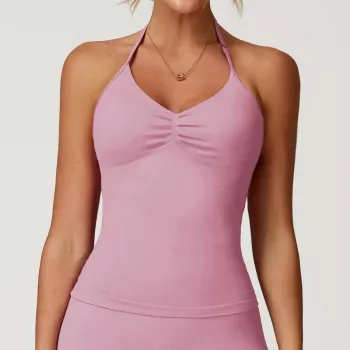
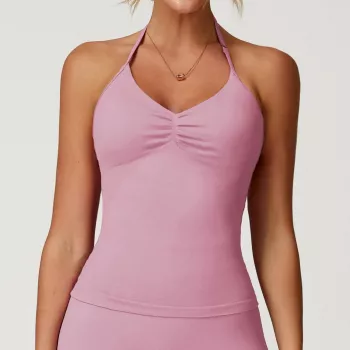
Designed for warm studios, outdoor sessions, and everyday athleisure, a breathable padded halter sports bra balances airflow, coverage, and a confident neckline. The right one should feel cool against the skin, stay put through bends and lifts, and keep a smooth shape without adding bulk. Below is a practical guide to what to look for, how it should fit, where it performs best, and how to care for it so the support and silhouette last.
A halter sports bra changes the way support is distributed. Instead of traditional straps that sit closer to the shoulders, the halter neckline shifts strap placement toward the center, opening up the shoulders and drawing attention to the collarbone area.
This design often feels more secure during forward-bending movements (think yoga flows, Pilates roll-downs, or mobility work) because the neckline sits higher than many scoop styles. For some body shapes, the halter layout can also reduce strap slippage by keeping tension closer to the neck and upper back.
Comfort comes down to smart engineering: the halter shape shouldn’t “hang” from the neck. The back band should provide the primary support so the neckline feels stable without pulling uncomfortably at the neck.
Breathable fabrics matter most when the temperature rises—hot yoga rooms, humid outdoor walks, or layered travel days. Materials that allow heat to escape and help moisture move away from the skin can make workouts feel noticeably less sticky and more comfortable over time. If overheating is a concern, it’s worth knowing the signs and precautions around heat exposure; the NIH’s overview of heat-related illness is a helpful reference.
Padding adds coverage and shape, but it should stay light-to-medium so it doesn’t feel bulky or trap heat. A smooth inner surface also reduces friction during repetitive motion—especially around the underbust and side seams. For skin comfort, the American Academy of Dermatology’s tips on preventing chafing can be useful if you’re prone to rubbing during sweatier sessions.
If the padding is removable, that’s a practical bonus: adjust coverage to preference, wash more thoroughly, and dry faster (especially helpful if you rotate bras frequently).
A breathable padded halter sports bra should feel secure, but never restrictive. Use this quick checklist before committing to a long workout day.
If anything feels “supported but sore” (especially at the neck), size adjustments or a different band construction usually solves it faster than “breaking it in.”
Halter bras can be a standout choice for studio movement and day-to-day wear, and they can work for higher-impact training depending on construction and personal support needs.
Yoga, Pilates, barre, and walking typically prioritize comfort, range of motion, and soft support. A breathable fabric and a neckline that stays put through bends are often more important than maximum compression.
Cycling, strength training, and dance cardio benefit from a stable band and a neckline that stays secure through lifts, rows, and repeated transitions from standing to hinged positions.
Running and HIIT can require more compression or added support features (depending on bust size and sensitivity). If you feel tugging at the neck or too much bounce, look for a firmer underband and a more structured build.
| Workout type | What to prioritize | What to check in the mirror |
|---|---|---|
| Yoga / Pilates | Breathability, comfortable neckline, smooth seams | No gaping at the top edge during forward folds |
| Strength training | Stable band, secure pads, freedom in shoulders | Band stays level during overhead press and rows |
| Cycling / spin | Sweat management, non-chafing fit | No rubbing at underarms after 10 minutes |
| HIIT / running | Higher support, minimal bounce, firm underband | No excessive movement during jumping jacks |
Style picks that pair well with a halter silhouette include Women’s High-Waist Wide-Leg Pants for relaxed days, or a lightweight top like the EA7 Women’s Pink T-Shirt for easy layering.
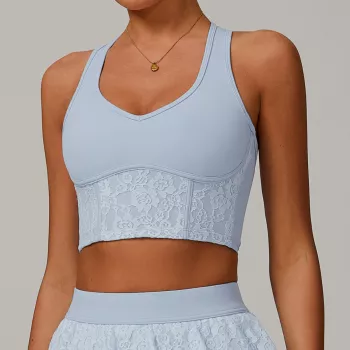
If you want a streamlined neckline with breathable comfort, the Breathable Padded Halter Sports Bra is a versatile pick for warm-weather workouts, studio sessions, and everyday athleisure where coverage and comfort matter.
For a coordinated outfit option, see the 3-Piece Women’s Workout Set – Long Sleeve Jacket, Sports Bra & High-Waist Leggings, which makes layering and post-workout coverage simple.
Yes—when the band provides most of the support and the neckline doesn’t pull at the neck. Test comfort with deep breaths and a few overhead arm movements before wearing it for long sessions.
They can, but breathable fabrics and lighter padding help prevent that “trapped heat” feel. Removable pads also make drying faster and let you adjust coverage based on the day.
It should feel snug and level without pain. The band shouldn’t ride up when you raise your arms, and it should stay in place during light jumps.









Leave a comment